Sunday, July 1, 2007

Denise's Trip to Germany

As a graduate student in the Kostka Lab, Denise Akob had the opportunity to spend the summer of 2007 as a guest scientist in the lab of Dr. Kirsten Küsel at the Friedrich-Schiller University Jena, Germany. The visit was supported by the Microbe-Mineral Interactions Graduate Research School which promotes international exchange of graduate students and scholars. During her time in Kirsten’s lab she worked in conjunction with Janna Sitte and Eva-Maria Burkhardt and focused on the biogeochemistry of microbial communities in surficial soils contaminated with radionuclides and heavy metals.


The Ronneburg Mining District during active uranium mining and before physical remediation efforts. Photo: http://www.centennialpark.de/page/en/geschichte/geschichte
The site was within the former Ronneburg Mining District, which was an area that was heavily mined for uranium from 1946-1990. Much of the Ronneburg Mining District has now been physically remediated but groundwater runoff from a former leaching heap has contaminated the water and soils of the aquifer with acid mine drainage (AMD). The Gessen Creek, downstream from the former leaching site, is heavily impacted by AMD and processes in the creek soils are affecting transport of heavy metal contaminants. The research performed during Denise’s trip was focused on identifying the active microorganisms in Gessen Creek soils and relating microbial activity to mobilization/immoblization of heavy metals. The work started in the summer of 2007 is still in progress and will be a part of both Jana and Eva's PhD dissertations. In addition to this work, research has continued on microbial communities in Gessen Creek soils through the work of 1 bachelor’s student, 2 diploma students and a new PhD student. Stay tuned for more updates!
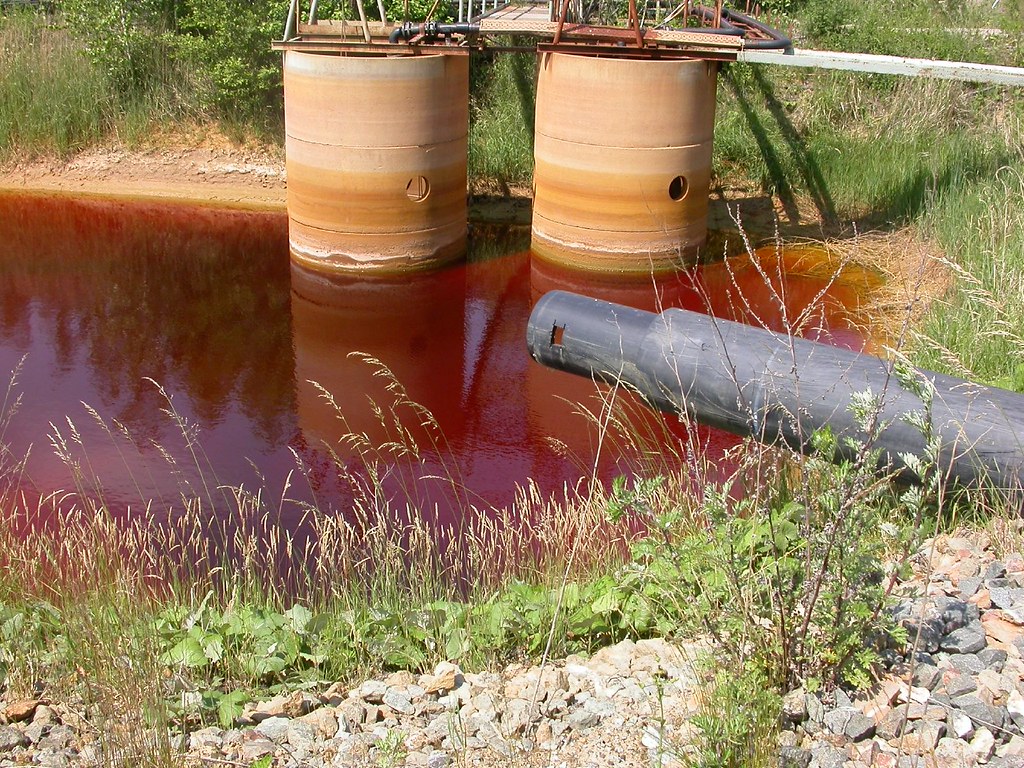
Photo of a drainage pond at a former leaching heap in the former Ronneburg Mining District. Photo: D. M. Akob, May 2007
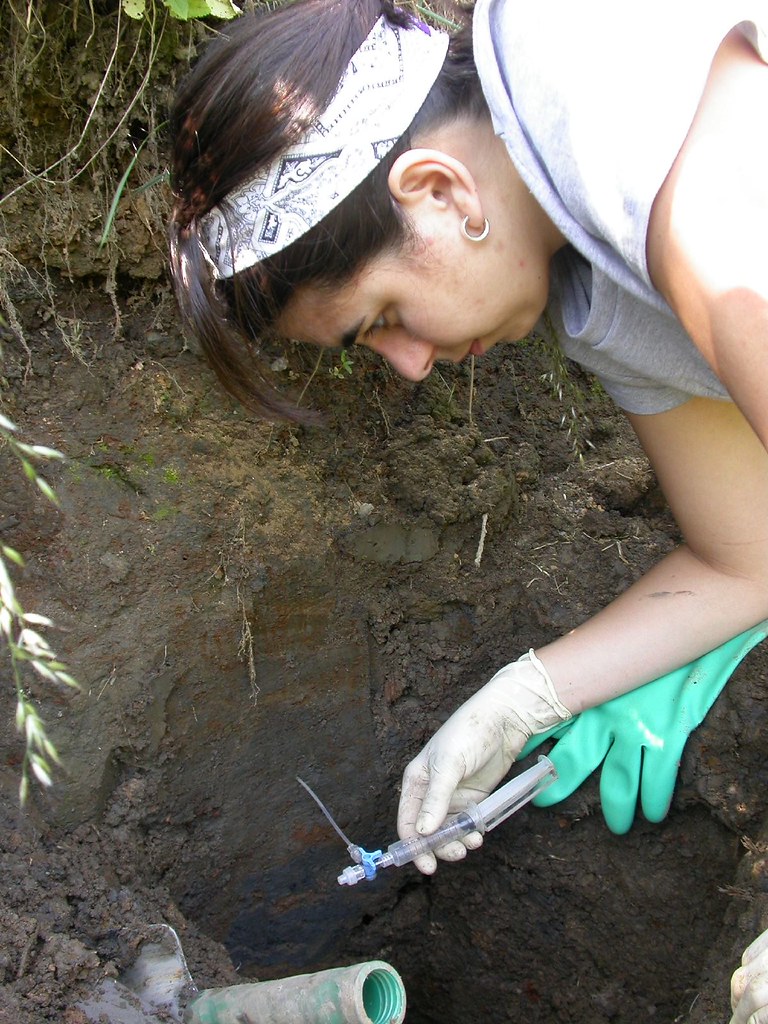
Sampling of porewater profiles in Gessen Creek soils. Photo: D. M. Akob, May 2007

Friday, June 30, 2006

Research in Review Features Kostka Lab Research

Research by Professors Joel Kostka and Marcus Huettel on nutrient cycling by microbes in coastal sands is profiled in this month’s FSU Research in Review. The story by Frank Stevenson emphasizes the shift in thinking by scientists as to the roll of sandy bottoms, long thought to be “biological wastelands” and have little to no ecological value in ocean systems. Permeable sediment research, such as that by professors Kostka and Huettel is painting a much more interesting picture of the role of coastal sands.

“Ask any Floridian about what healthy beaches mean to the state’s economy and get ready for an earful.

If state nicknames made any sense at all, “The Sunshine State” would be called “The Beach State.” Take away half of Florida’s sunny days, and the state’s sandy shoreline would still be a perpetual magnet for people and money year-round—a gritty goldmine that defies every natural force known—from hurricanes to red tide—to keep the state’s tourism-based economy the envy of every landlocked state (and others, too.)

Still, most people don’t have a clue what the real story is behind the value of sandy coastlines—not just in Florida but also around the world. Just in the past 20 years, researchers have begun amassing tantalizing evidence that is revolutionizing scientists’ appreciation of coastal sands and their vital role in the overall health not of seaside economies but of the world’s oceans.

What’s happening is nothing less than a sea change in scientists’ thinking about the vast, sandy bottoms and beaches laid up against the third of the planet that’s dry land. For decades, marine biologists have taught that most of the shallow, near-shore bottoms of the globe’s continental shelf are largely biological wastelands—little more than an immense submarine desert largely devoid of life and of little ecological value. Now, these and a host of other researchers are beginning to realize just how wrong they’ve been all along. . . ” Continue reading here >