As a graduate student in the Kostka Lab, Denise Akob had the opportunity to spend the summer of 2007 as a guest scientist in the lab of Dr. Kirsten Küsel at the Friedrich-Schiller University Jena, Germany. The visit was supported by the Microbe-Mineral Interactions Graduate Research School which promotes international exchange of graduate students and scholars. During her time in Kirsten’s lab she worked in conjunction with Janna Sitte and Eva-Maria Burkhardt and focused on the biogeochemistry of microbial communities in surficial soils contaminated with radionuclides and heavy metals.
 The Ronneburg Mining District during active uranium mining and before physical remediation efforts. Photo: http://www.centennialpark.de/page/en/geschichte/geschichte
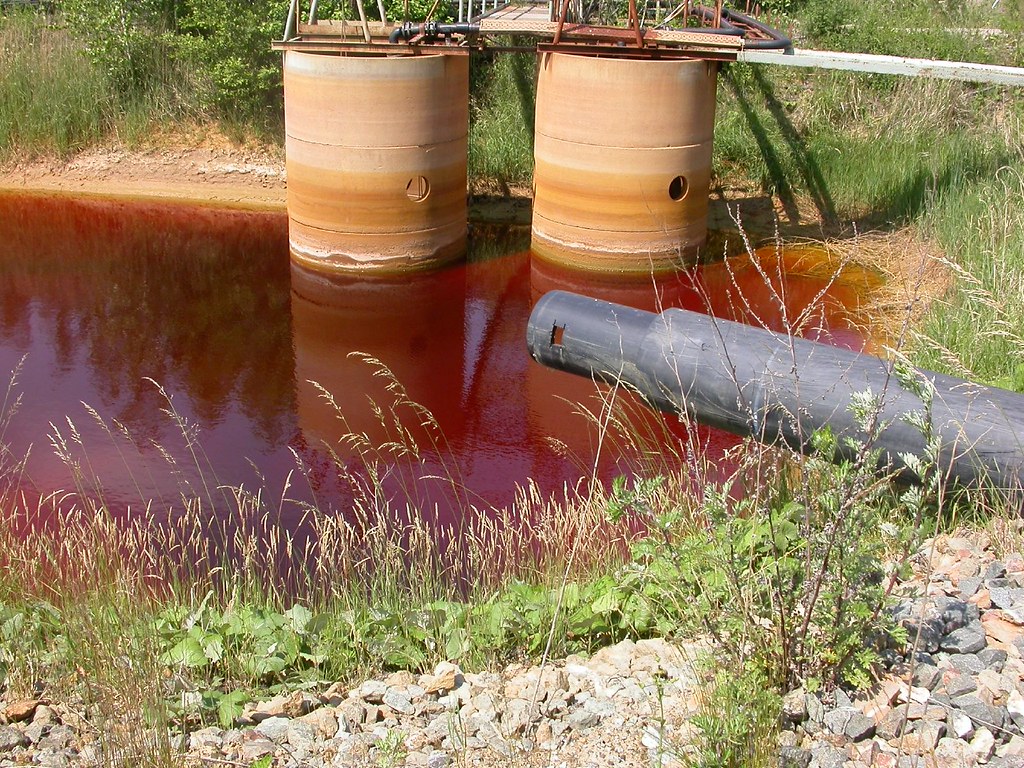
The site was within the former Ronneburg Mining District, which was an area that was heavily mined for uranium from 1946-1990. Much of the Ronneburg Mining District has now been physically remediated but groundwater runoff from a former leaching heap has contaminated the water and soils of the aquifer with acid mine drainage (AMD). The Gessen Creek, downstream from the former leaching site, is heavily impacted by AMD and processes in the creek soils are affecting transport of heavy metal contaminants. The research performed during Denise’s trip was focused on identifying the active microorganisms in Gessen Creek soils and relating microbial activity to mobilization/immoblization of heavy metals. The work started in the summer of 2007 is still in progress and will be a part of both Jana and Eva's PhD dissertations. In addition to this work, research has continued on microbial communities in Gessen Creek soils through the work of 1 bachelor’s student, 2 diploma students and a new PhD student. Stay tuned for more updates!
 Photo of a drainage pond at a former leaching heap in the former Ronneburg Mining District. Photo: D. M. Akob, May 2007
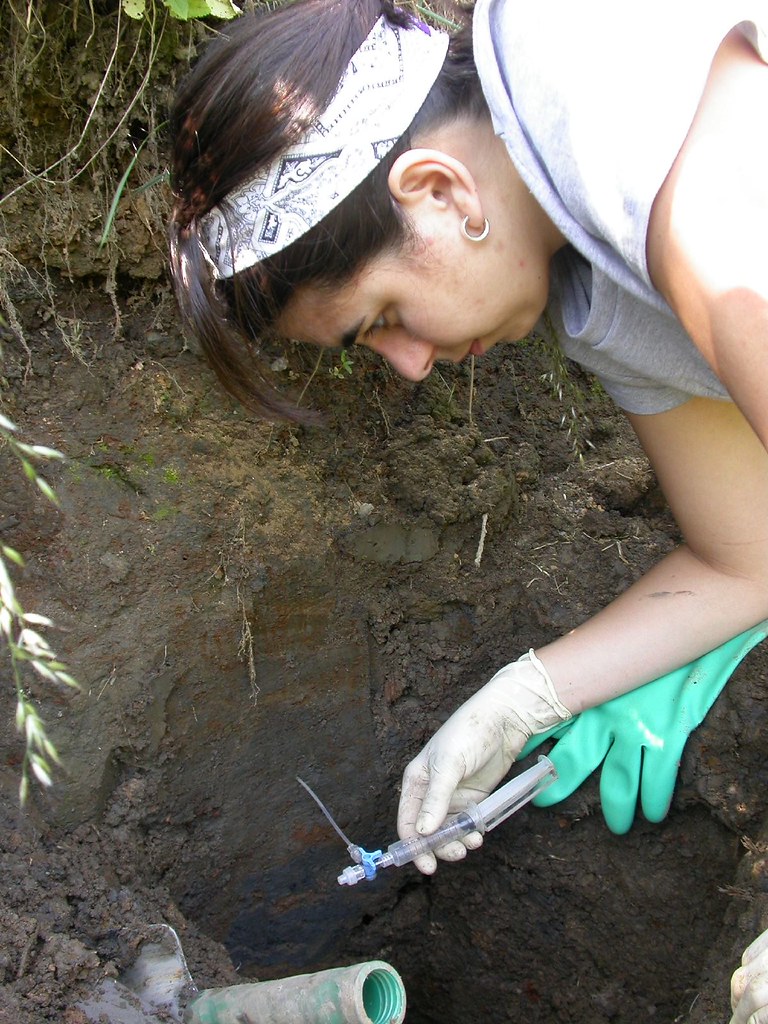
 Sampling of porewater profiles in Gessen Creek soils. Photo: D. M. Akob, May 2007